Emergency Roof Tarping & Timber-Batten Stabilization in Cincinnati, OH
Commercial-grade temporary weather barriers mechanically secured with kiln-dried 2x4 spruce timber battens designed to withstand severe Ohio Valley thunderstorm winds.
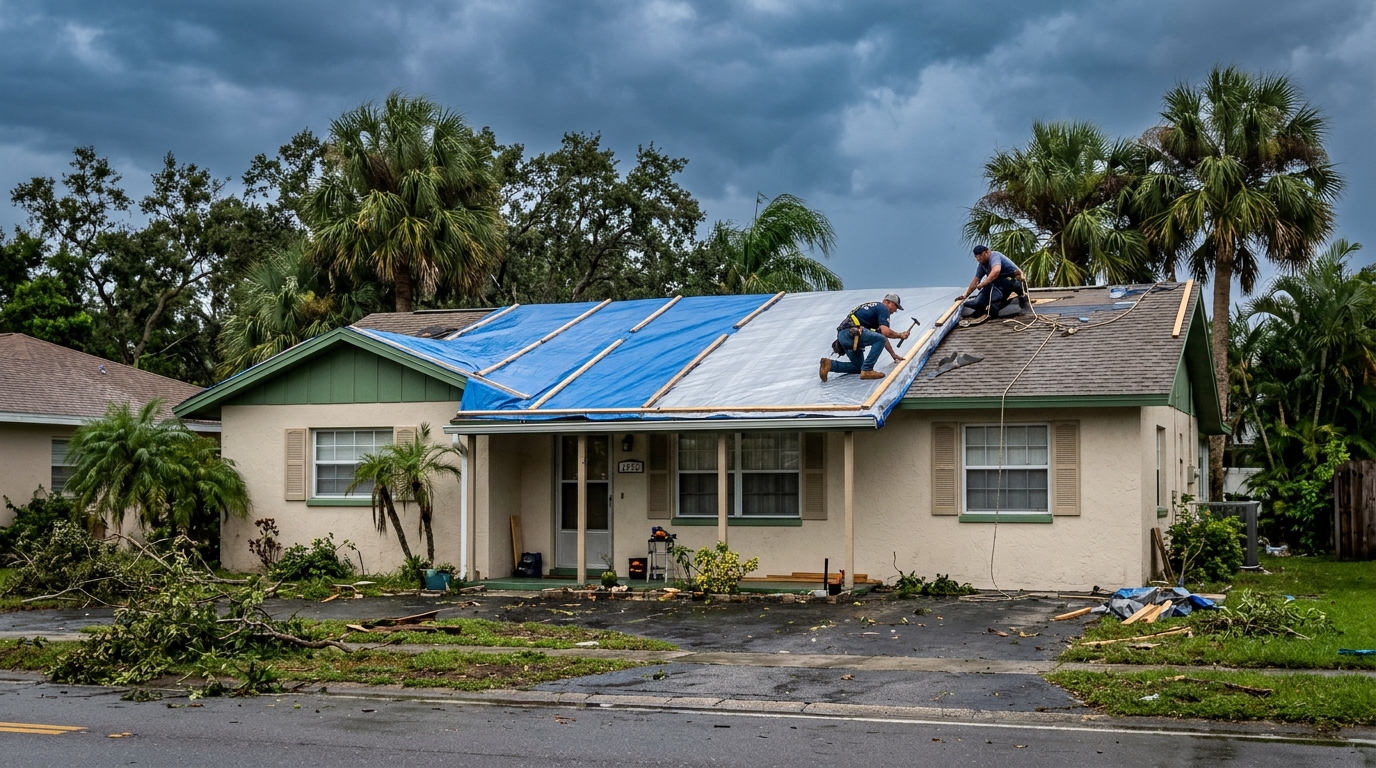
Immediate Cincinnati Field Protocol: Emergency Roof Tarping
Root Engineering Challenge: Catastrophic shingle blow-offs from macroburst thunderstorm winds, fallen tree limbs, or structural decking punctures leaving raw plywood sheathing exposed to torrential rainfall.
- Step 1: Safety inspection of rafter structural load-bearing capacity and electrical hazard de-energization
- Step 2: Deployment of heavy 12-mil UV-resistant reinforced woven polyethylene tarping membranes rated for severe storm exposure
- Step 3: Mechanical fastening with kiln-dried 2x4 timber battens screwed directly into structural roof rafters
- Step 4: Perimeter water-shedding transitions wrapped completely over roof ridges to eliminate open windward seams
1. Ohio Valley Regional Microclimate & Severe Storm Dynamics
The climatic vulnerabilities of Cincinnati, Ohio are shaped by the dynamic interplay of the Ohio River Valley basin and seasonal midwestern weather systems. The convergence of warm humid air from the South and cold continental air masses from Canada creates intense frontal boundaries that frequently spawn severe multi-cell squall lines, convective hail storms, and high-velocity straight-line wind events across Hamilton, Butler, Warren, and Clermont counties.
In communities such as Mason, West Chester, Loveland, and Anderson Township, severe thunderstorm downbursts exceeding 60 to 75 mph generate aerodynamic uplift that snaps weathered shingle tabs, dislodges chimney counter-flashings, and tears open vulnerable valley seams. Hailstones exceeding one inch in diameter strike roof planes at terminal velocities, dislodging ceramic granules, fracturing internal fiberglass scrims, and compromising underlying weatherproofing membranes. Understanding these localized atmospheric and kinetic forces is critical for implementing permanent, code-compliant restoration rather than temporary cosmetic patches.
2. Non-Destructive Moisture Diagnostics & FLIR Thermal Tracing
Water intrusion in sloped residential roofs and low-slope commercial structures rarely follows a straightforward vertical path. Water entering through a hail-bruised shingle course or a wind-lifted ridge cap frequently travels horizontally across underlayment courses, along plywood sheathing joints, or over structural ceiling rafters before dripping through finished drywall or plaster.
Dispatched contractors utilize high-resolution FLIR infrared thermal imaging cameras and digital capacitance moisture meters to track water intrusion non-destructively. Because wet building materials retain cooler temperatures through evaporative heat loss, infrared sensors map exact subsurface moisture boundaries as high-contrast color thermal gradients. This allows technicians to pinpoint the active entry point on the exterior roof deck without cutting unnecessary inspection holes in finished ceilings or walls.
3. Step-by-Step Substrate Restoration Methodology
Permanent resolution of storm damage in Greater Cincinnati requires strict adherence to engineered restoration protocols:
- Structural Assessment: Technicians inspect attic rafters, trusses, and plywood decking for delamination, dry rot, structural sagging, and microbial growth.
- Substrate Preparation: Damaged shingles, corroded valley metals, and brittle underlayment are stripped cleanly to expose sound decking. Rotted sheathing is replaced with APA-rated exterior CDX plywood.
- Multi-Layer Weatherproofing: Application of high-temperature self-adhering polymer-modified bitumen underlayment along eaves, valleys, and wall flashings, topped with synthetic tear-resistant underlayment.
- Mechanical Integration: Installation of ASTM D3462 dimensional architectural shingles fastened with hot-dipped galvanized roofing nails placed below sealant lines to withstand 130 mph Ohio Valley wind gusts.
- Precision Flashing Seals: Installation of 24-gauge corrosion-resistant step and counter-flashing sealed into diamond-cut masonry reglets with ASTM C920 polyurethane sealants.
4. Ohio Building Code Title 4101:1 & Municipal Licensing Compliance
All roofing construction in Greater Cincinnati must comply with the Ohio Residential Code (R905) and local municipal building ordinances enforced by the City of Cincinnati Department of Buildings and Inspections. Key technical requirements include:
- High-Wind Fastening Patterns: Shingles secured with 6 hot-dipped galvanized nails positioned beneath the sealant line to withstand 110–130 mph wind gusts (ASTM D3161 Class F / ASTM D7158 Class H).
- Chimney Cricket Mandates (ORC R905.2.8.3): A chimney saddle or cricket must be constructed on the ridge side of any chimney greater than 30 inches wide to prevent water accumulation.
- Valley Flashing Lining: Minimum 36-inch-wide self-adhering polymer-modified bitumen underlayment lining along all valleys prior to metal pan placement.
- Contractor Registration: Independent roofing contractors dispatched through our network maintain valid contractor registration with local municipal building departments, hold active commercial general liability coverage, and comply with Ohio Bureau of Workers' Compensation (BWC) standards.
5. Preventative Property Maintenance & Severe Storm Preparedness
Protecting your Cincinnati property from catastrophic storm and hail failures requires proactive maintenance before severe weather develops:
- Attic Inspection & Air Sealing: Inspect attic spaces annually for signs of moisture staining along rafter tails and ensure proper airflow through soffit and ridge vents.
- Gutter & Downspout Maintenance: Clear gutters, downspouts, and underground drainage pipes of organic debris to ensure rapid storm runoff without overflow.
- Tree Canopy Management: Trim mature hardwood branches located within 10 feet of the roofline to prevent high-wind limb shearing and heavy impact punctures.
- Post-Storm Assessment: Schedule a professional forensic inspection immediately following any hail or severe thunderstorm event to document hidden granule loss and shingle bruising before latent leaks develop.
Facing Active Storm Damage in Greater Cincinnati?
Zero web forms, callback queues, or email delays. Speak immediately with a live dispatch intake specialist to evaluate your emergency and mobilize on-call licensed local crews.
CLICK TO CALL DISPATCH: (888) 208-4155